Alchemy Factory Recipes: Tech Tree & Workbench
Verified guide to Alchemy Factory 1.0 recipe changes: Linseed Oil balance, Obsidian Marble byproducts, and Workbench research progression.
Quick Answer: Official 1.0 Recipe and Research Updates
Alchemy Factory Version 1.0 streamlined the crafting economy with precise balance adjustments:
- Workbench Utility Focus: Utility structures are crafted at the physical Workbench, keeping the Tech Tree dedicated to automation machines.
- Obsidian Byproduct: Smelting obsidian now yields Marble instead of Volcanic Ash, feeding directly into high-tier masonry and architectural building sets.
- Linseed Oil Normalization: Production and consumption requirements were scaled down equally to prevent fluid pipe clogs and balance fluid network pressure.
- Beverage Integration: New Brew Barrel fermentation recipes unlock high-margin drink retail without requiring catalyst slots.
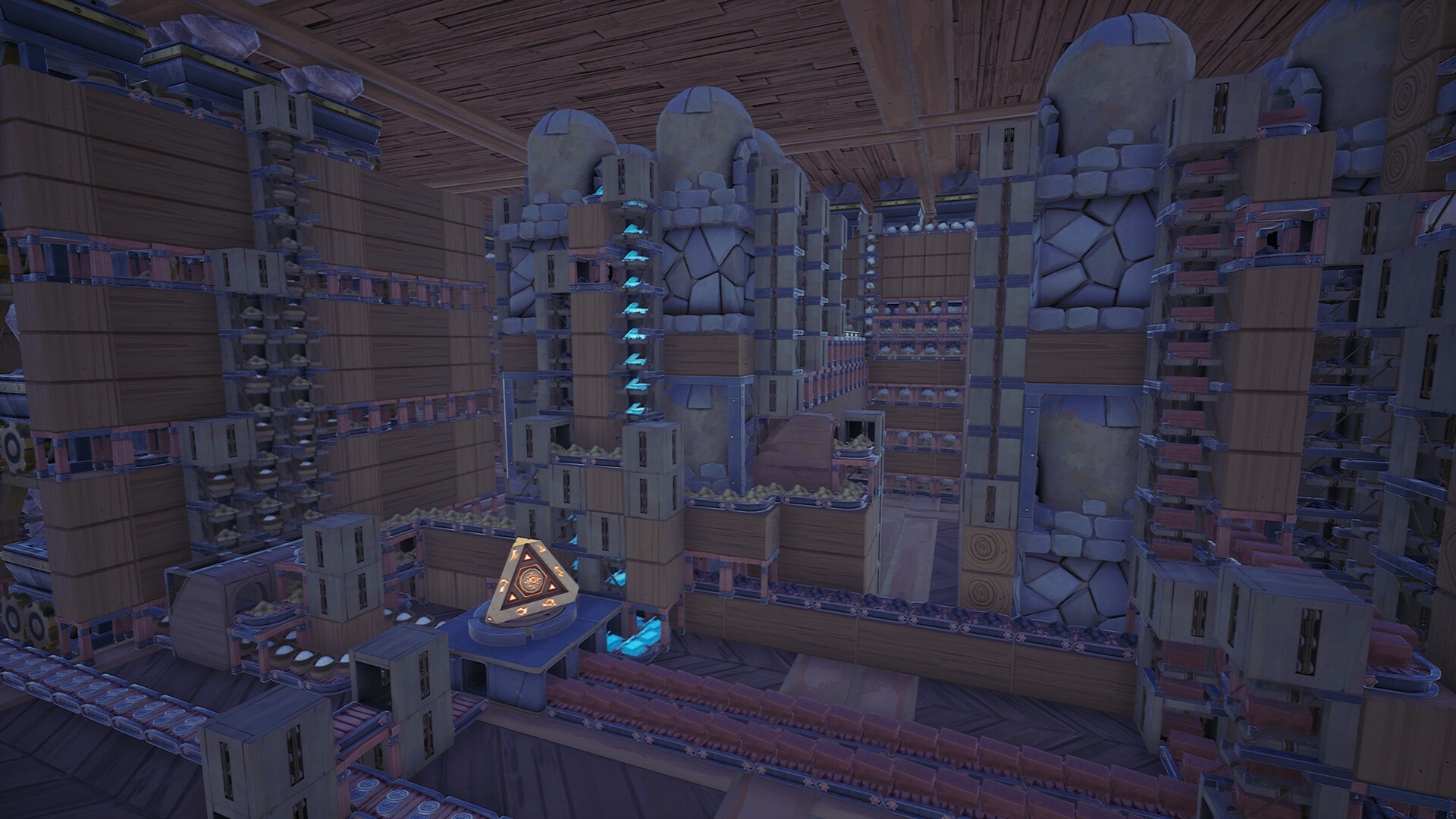
Key Recipe Changes in Version 1.0
Official patch notes confirmed several critical alchemy adjustments that affect existing factory blueprints:
| Recipe Line | Early Access Formula | 1.0 Official Formula | Architectural Impact |
|---|---|---|---|
| Obsidian Smelting | Yielded Volcanic Ash | Yields Marble Byproduct | Feeds the new modular Marble building set directly |
| Linseed Oil | High volume feed / high drain | Proportionally reduced throughput | Frees pipe bandwidth for beverage lines and simplifies fluid networks |
| Beverages | Not available | Brew Barrel Reagent Recipes | Unlocks direct retail beverage trade and counter chiller integration |
| Modular Masonry | Wood and basic stone only | Brick and Marble Construction Sets | Enables aesthetic multi-story factory compounds with distinct districts |
Smelting obsidian in high-temperature athanors formerly left players with piles of low-utility volcanic ash. By shifting the output to solid Marble, Version 1.0 creates a closed-loop supply for constructing durable industrial structures. Similarly, normalizing Linseed Oil consumption prevents fluid conduits from backing up, allowing players to share pressurized pump networks across both industrial and brewing sectors.
Navigating the Decoupled Progression System
In Version 1.0, progression splits cleanly into two distinct operational systems:
- The Physical Workbench Track: All material handling and utility devices (conveyor splitters, mergers, belt bridges, storage crates, and structural walls) are unlocked and crafted at the physical Workbench.
- The Alchemical Tech Tree Track: Alchemical insight points are invested exclusively into unlocking advanced industrial machinery (athanors, transmuters, distillation columns, arcane fountains, and high-temperature cauldrons).
This decoupling ensures that expanding factory infrastructure does not compete with machine tier research. Players can craft utility splitters and conveyor bridges immediately using basic planks and stone, while saving precious research points for chemical automation.
Research Skill Lines: What Each Upgrade Does
The game exposes ten upgradeable skill lines that govern factory efficiency. Each line has a base level shown in the research panel and scales with invested points:
| Skill Line | What It Boosts | Operational Baseline | Strategic Priority |
|---|---|---|---|
| Logistics Efficiency | Conveyor belt transit velocity | Baseline item transit speed | Early Game Priority (smooths bottlenecks) |
| Throwing Efficiency | Arcane Fountain and catapult launch rates | Catapult projectile frequency | Mid Game Priority (long-range routing) |
| Factory Efficiency | Device production cycle speed & heat conservation | 100% baseline machine speed | Core Sustained Investment |
| Alchemy Skill | Resource extractor output yield | 100% baseline raw yield | Mid Game Scaling |
| Fuel Efficiency | Effective thermal heat value per fuel unit | 100% baseline burn efficiency | Essential when scaling smelters |
| Fertilizer Efficiency | Crop yield and growth potency per fertilizer unit | 100% baseline nutrient value | Top Endgame Priority (compounds Cauldron margins) |
| Sales Ability | Storefront profit margin multiplier on retail goods | 100% baseline price margin | Direct passive revenue boost |
| Negotiation Skill | Maximum volume accepted by purchase/dispatch contracts | 100% baseline contract quota | Essential for scaling royal commissions |
| Customer Management | Bonus rewards earned from patron side quests | 100% baseline quest payout | Secondary flavor progression |
| Relic Knowledge | Relic extraction rate and appraisal bonus | 100% baseline relic value | Late-game luxury relic trade |
Which Skill Lines to Prioritize Across Progression Phases
To maximize compound growth, sequence research upgrades based on your current operational bottlenecks:
1. Opening Phase: Logistics and Basic Processing
On a fresh map, belt speed caps raw material intake. Investing in Logistics Efficiency first ensures that starter gathering lines do not back up. Follow this with Factory Efficiency to shorten early athanor cycle times and reduce manual waiting.
2. Mid-Game Scaling: Commerce and Wholesale Capacity
Once basic production runs automatically, invest in Sales Ability and Negotiation Skill. Raising negotiation capacity expands the maximum item quotas accepted by dispatch docks, allowing wholesale bandage lines and royal commissions to pay out significantly larger gold rewards.
3. Endgame Supremacy: Fertilizer Efficiency Compounding
When Transmutation Cauldrons unlock, shift all available points into Fertilizer Efficiency. Because agricultural crops can be transmuted into expensive minerals and gold dust inside Cauldrons, cheap fertilizer reduces production costs across your entire manufacturing tree to a fraction of standard values.
Research Priority Order & Workbench Unlock Sequencing
| Progression Phase | Tech Tree Priority | Workbench Utility Unlock | Factory Impact |
|---|---|---|---|
| Opening Phase | Basic Herb Grinding & Mortar Lines | Splitter & Belt Bridge | Separates raw herb intake from fuel feed without crossing conveyors |
| Mid-Game Scaling | Cauldron & Athanor Catalyst Tiers | Priority Merger & Overflow Gate | Routes surplus reagents to commission crates while keeping cauldrons saturated |
| Late-Game Automation | Negotiation Skill & Beverage Brewing | Rail Loader & Wagon Signals | Connects multi-room alchemy halls directly to storefront and royal dispatch |
Common Research & Blueprint Migration Mistakes
- Looking for Splitters in the Tech Tree: Players accustomed to legacy versions often waste research searching for conveyances that now craft directly at the Workbench.
- Sinking Early Points into Decorative Masonry: While Brick and Marble sets look impressive, they provide no production throughput bonuses. Focus on logistics and machine upgrades first.
- Neglecting Negotiation Skill: Leaving Negotiation at baseline artificially caps dispatch commission sizes, choking passive wholesale revenue.
- Ignoring the In-Game Codex: The research panel tracks current level bonuses and efficiency percentages for every skill line. Audit your levels regularly to identify neglected production vectors.
Related Guides
- Look up exact ingredient ratios in the Complete Cauldron Recipe Database.
- Unlock advanced catalytic transmutation using our Catalyst Tier Guide.
- Plan factory rail expansion with the Wagon Transport Blueprint.
Blueprint FAQs
What are the confirmed recipe balance changes in 1.0? +
Obsidian smelting now yields Marble as a valuable byproduct rather than Volcanic Ash, and Linseed Oil production and consumption ratios have been scaled down proportionally.
How does the 1.0 Tech Tree differ from Early Access? +
All non-production utility devices were removed from the Tech Tree and must now be crafted and unlocked at the physical Workbench.
What materials are used for new decorative construction? +
Version 1.0 introduced Brick and Marble building modular sets for constructing durable multi-tier factories.