Alchemy Factory Beginner Guide: Conveyors & Setup
Master early automation in Alchemy Factory 1.0. Connect conveyor belts, fluid pipes, and workbench crafting to build a profitable alchemical empire.
Quick Answer: Essential Automation Principles
In Alchemy Factory Version 1.0, successful early-game automation rests on three verified mechanical principles:
- Workbench vs Tech Tree Split: Non-production utility devices are crafted at the physical Workbench, while production machines are researched through the Tech Tree.
- Dual Logistics Grid: Route solid components along directional conveyor belts and liquids through dedicated fluid pipes, keeping the networks cleanly segregated.
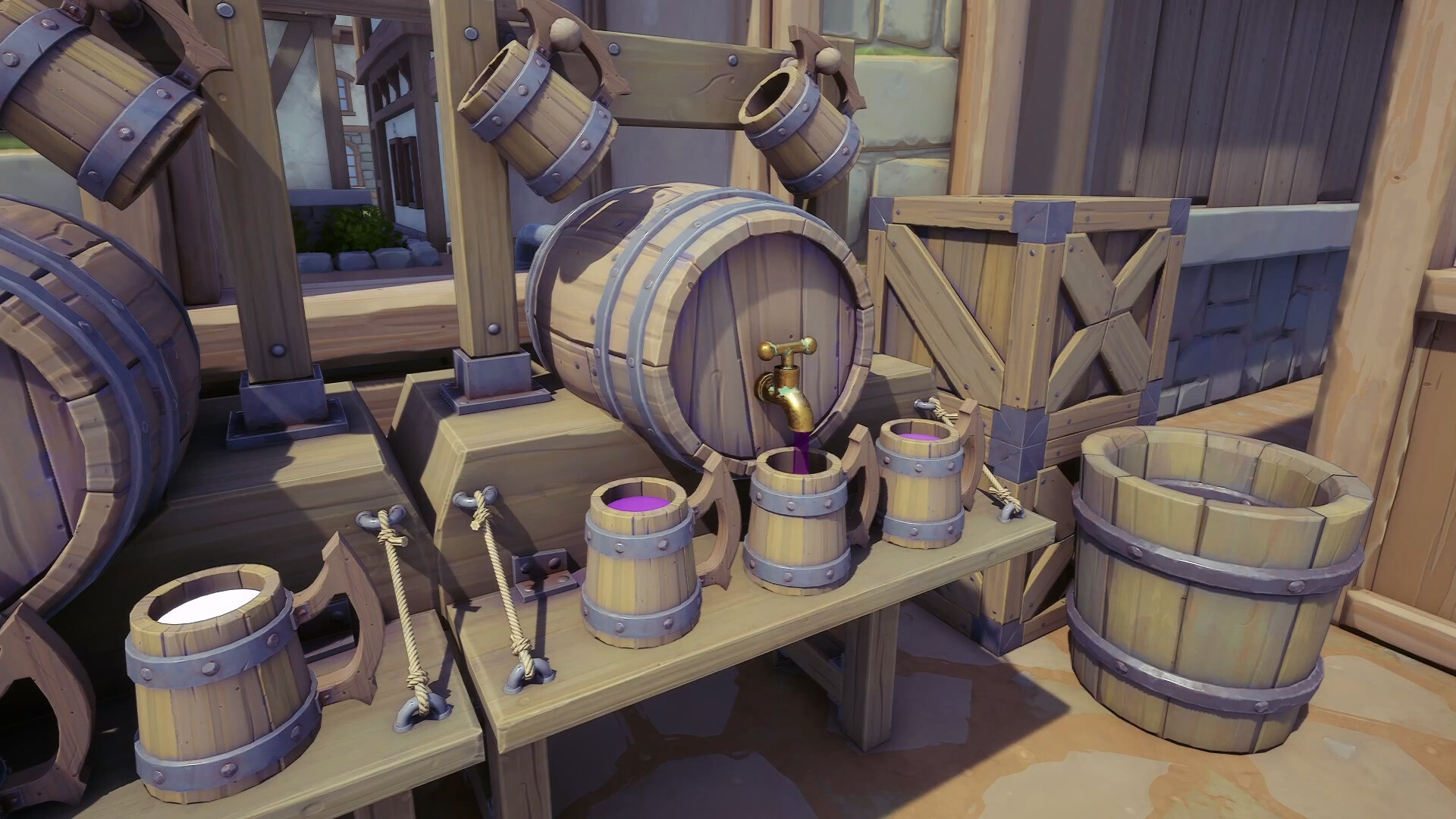
- Storefront Direct Feed: Direct outputs from Brew Barrels and basic potion lines straight to your retail shelves to build early gold reserves and boost Shop Recognition.
The official 1.0 pitch frames the whole loop: start with a small shop, team up with friends, use conveyor belts, pipes, and magical devices to build automated production lines, stock your shelves with potions, jewelry, and relics, fulfill commissions, and grow into an alchemy tycoon. Everything in this guide follows that arc.
Step 1: Gathering Raw Ingredients and First Tools
Before laying extensive assembly lines, gather starter herbs, stones, and water around your home plot. Construct your initial Workbench to access essential logistical structures.
- Botanical Harvesting: Gather base herbs for initial potion crafting and refining.
- Fluid Connections: Lay fluid pipes from clean water sources into processing basins.
- Utility Fabrication: Craft splitters, basic belts, and pipe fittings at the Workbench rather than searching for them in the Tech Tree.
Step 2: Laying Out Conveyor Belts and Fluid Pipes
Automation in Alchemy Factory requires managing two independent transport layers:
- Conveyor Belts: Directional tracks designed for moving solid ores, herbs, and bottled goods between workstations. Arrow indicators specify transport direction.
- Fluid Pipes: Enclosed conduits that transfer water, oils, and chemical solutions to athanors and barrels.
- DAG Cluster Optimization: In Version 1.0, unrelated conveyor segments are organized into independent clusters. Keeping distinct production loops separate prevents belt slowdowns.
Early Game Equipment & Logistics Matrix
The table below outlines core apparatus available during the early setup phase:
| Apparatus | Mechanical Function | Sourcing Method | Operational Role |
|---|---|---|---|
| Conveyor Belt | Directional solid item transfer | Crafted at Workbench | Short-range linkage between extractors and processors |
| Fluid Pipe | Liquid transport for water and solutions | Crafted at Workbench | Supplies fluid inputs to brewing and refining devices |
| Workbench | Assembles non-production utility devices | Hand-crafted in field | Fabricates belts, pipe connectors, and splitters |
| Brew Barrel | Ferments commercial beverage goods | Unlocked in progression | Generates high retail gold margins from beverage sales |
| Wagon System | Rail-based bulk batch transport | Unlocked in mid-game | High-capacity long-distance transit across factory grounds |
Step 3: Integrating Storefront Shelves & Shop Recognition
Your factory infrastructure directly feeds your commercial shop. Automating outputs into sales racks creates continuous economic turnover:
- Shelf Stocking: Run conveyor lines terminating at display counters so customers can purchase items automatically.
- Shop Recognition Growth: In Version 1.0, customer feedback no longer reduces reputation. Completing sales steadily advances your Shop Recognition tier, unlocking higher customer foot traffic.
- Multiple Shop Entrances: You can remove the initial shop entrance and construct multiple gates at different points around your building to streamline customer access.
1.0 New Systems You Meet in Your First Session
The Version 1.0 release (September 8, 2026) added several systems a new player will encounter within the first few shop days:
| System | What It Does (Official 1.0 notes) | Why It Matters Early |
|---|---|---|
| Brew Barrel & Beverage category | A new Goods category: use Brew Barrels to produce drinks and sell them | One of the fastest retail margin loops available in the early game |
| Arcane Fountain | A throwing device that automatically searches for suitable targets to throw at | Lets you automate a second material-delivery layer without belt rerouting |
| Grand Portal | Customers from distant cities visit your shop through the portal | Extra customer traffic on top of local footfall, boosting sales volume |
| Customer Navigation Rework | Customers can properly reach upper floors; the initial shop entrance can be removed and multiple gates built | Enables multi-story shops and multiple entrances from day one |
Note on the Fountain: hotfix v1.0.4962 changed Table Saws and Stone Crushers so they reject Arcane Fountain input by default unless you explicitly specify it, so when you first wire a Fountain to a saw or crusher, set the input connection explicitly.
Scaling Beyond Belts: The Wagon Logistics System
As your alchemical complex expands across multiple biomes, relying entirely on conveyor belts creates transit delays. Version 1.0 introduces the Wagon Logistics System:
- Superior Capacity: Rail-mounted wagons carry substantially greater batch volumes than standard conveyor belts.
- Track Inspection: Players can transform into a wagon to ride along rails, inspecting automated lines and checking for supply bottlenecks.
- Long-Haul Linking: Use belts for dense localized machinery clusters, and lay rail lines to connect remote mining nodes to your central shop.
Common Beginner Mistakes
- Searching the Tech Tree for Utility Items: Non-production utility parts are fabricated at the physical Workbench.
- Overextending Conveyor Belts: Running single belts over vast distances causes item travel delays. Use the rail Wagon System for long-haul routes.
- Merging Fluid and Solid Feeds: Pipes and belts handle distinct physical states. Keep fluid lines elevated or separated from belt corridors.
- Neglecting Multiple Storefront Entrances: Sticking to a single entrance limits customer throughput as your shop floor expands.
Related Guides
- Review Workbench & Tech Tree Milestones to plan your first tier unlocks.
- Scale early retail revenue using the Brew Barrel & Drink Bar System.
- Connect distant gathering biomes with the Track & Rail Wagon Network.
Blueprint FAQs
How do I start automating in Alchemy Factory 1.0? +
Begin by harvesting starter botanical and mineral resources, craft conveyor belts and utility items at the physical Workbench, and connect your initial gathering lines to refining athanors and retail shelves.
Where do I unlock non-production utility devices in 1.0? +
In Version 1.0, non-production utility devices are unlocked at the physical Workbench rather than the Tech Tree, which focuses on production machinery.
How do conveyor belts behave in Version 1.0? +
Version 1.0 separates conveyor networks into independent DAG clusters, ensuring that separate production lines run stably at high speeds without cross-network performance drops.
When should I upgrade from conveyors to rail wagons? +
Conveyors excel at short-range connections between machines. When moving bulk goods across long distances between processing halls and depots, transition to the Wagon Logistics System for superior transport volume.